
Sermon
The Patience to Wait, the Courage to Act
Sunday, November 8, 2026
The Rev. Lucia Lloyd
Share This Sermon
Scripture Reading
Select the Bible reference below to read the passage without leaving the sermon.
I want to begin by admitting that I, personally, hate waiting. First, I hate the uncertainty of not knowing what’s going to happen. That uncertainty is bad enough when you know in advance how long you are going to have to wait until you find out what’s going to happen. But what I hate even more are the times when you have to wait, and you don’t even know how much longer the wait will go on, or whether the thing you are waiting for will ever happen at all.
The second reason I hate waiting is the anxiety. Waiting sometimes feels like I’m standing in an empty room, and the doors open, and all the anxiety goblins rush in to fill the empty space, each one muttering about a different thing that could go wrong, each one bringing up another worst-case scenario.
The third and probably deepest reason I hate waiting is that I hate how helpless and out-of-control I feel when I have to wait. I would rather have something I can do to try to make things turn out well, even if it’s hard work, than to sit helplessly while unpredictable forces beyond my control determine what happens to me, and to people I care about.
So I have very mixed feelings about the fact that waiting has such a prominent role in our scriptures, and in the church. Waiting is especially prominent at this time of year. Waiting is a prominent theme of the season of Advent. In Advent, we wait for the birth of Christ and we wait for the Second Coming of Christ. But there are so many scriptures about waiting that they won’t all fit into the four Sundays of Advent, and so they also show up in our lectionary in the weeks before Advent. As a result, in some ways it seems like Advent is seven weeks long.
This is true of today’s scripture from 1st Thessalonians. The Christians in Thessolonika had expected that Christ would return within their lifetime and have been waiting for his return. But some of them have died while they’ve been waiting. Those who are alive wonder whether their friends who have died before Christ’s return will miss out on being reunited with Christ. They have shared their anxieties with the Apostle Paul and asked him what’s going on. Paul reassures them with this passage, saying “Since we believe that Jesus died and rose again, even so, through Jesus, God will bring with him those who have died.” Paul gives them a way to picture this in visuals and sounds: “For the Lord himself, with a cry of command, with the archangel’s call and with the sound of God’s trumpet, will descend from heaven, and the dead in Christ will rise first. Then we who are alive, who are left, will be caught up in the clouds together with them to meet the Lord in the air, and so we will be with the Lord forever. Therefore encourage each other with these words.” Paul doesn’t provide details about how long the wait will be; instead, what he does is to replace the anxiety of their waiting with encouragement they can share with each other about their ultimate reunion with one another and with the risen Christ.
Waiting is also a prominent theme in our gospel passage. We are now in Matthew chapter 25, as time is running out in Jesus’ life on earth. Shortly before the Last Supper and his crucifixion, Jesus is teaching his disciples about his eventual return. Scholars identify five discourses from Jesus in the Gospel of Matthew, and today’s passage is in the fifth one, which scholars call the Eschatological Discourse, or sometimes the Apocalyptic Discourse, because in this discourse Jesus is talking about his return and the end of this age. Today we read the first section of Matthew 25, the parable of the bridesmaids, next Sunday we’ll read the next section, the parable of the talents, and the Sunday after that we’ll read the third section, the parable of the sheep and the goats.
Today’s gospel passage deals with a situation similar to the one in today’s passage from Thessalonians. If Jesus doesn’t return as soon as people thought he would, what do we do then?
The ten bridesmaids in this parable have a lot in common. There is only one thing that separates the fools from the wise.
What separates the fools from the wise is that, when it is necessary to wait, the wise have the ability to wait, and the fools have run out of their ability to wait. It pains me to say this, because of how much I personally hate to wait, but there it is.
What exactly does the oil in the lamps represent? None of the answers given by the scholars and commentators I’ve read have been satisfying to me, and maybe that’s the point. The ability to wait well and faithfully isn’t just one thing; it’s a mix of things. The old-fashioned virtue of patience is there, of course. Endurance is in the mix, endurance of the very unpleasant experiences of uncertainty, anxiety, and helplessness that waiting brings. Stick-to-itiveness is there. Persistence. Perseverance. Maybe even grit. While all these are important, I also have the sense that the ability to wait well and faithfully is not just about our own determination. It’s also about the ability to let go of constantly trying to be in control. The ability to humbly acknowledge how much we do not control the universe. So it’s also trust in God. It’s hope. It’s faith, which includes being in it for the long haul, in both the good times and the bad times.
The difference between the wise and the fools is not a difference in IQ. In the scriptures, the wise are aligned with the ways of God while the fools are not. Fools want immediate gratification, and if they don’t get it, they have no more internal resources. The wise have the awareness that the fact that something isn’t happening now, doesn’t mean it will never happen. Fools have rigid expectations they insist should be met. The wise have an openness to possibilities beyond what they have seen so far.
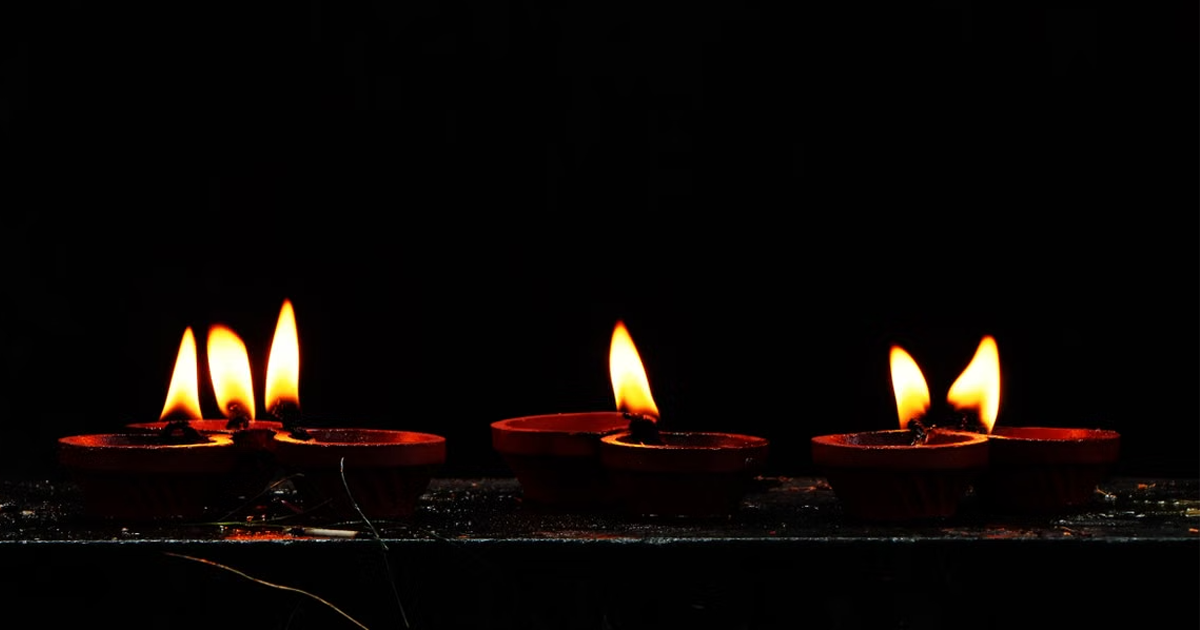
In this parable, the wise are prepared to wait, if necessary. The fools are not. And I love the beautiful visual image Jesus gives us here of the wise waiting with the bright glow of the light that burns in the lamp, the healthy flame well-fueled with oil. When the shout comes that the bridegroom is arriving, the glow of this flame lights their way through the night to get to the wedding banquet.
Things do not go well for the fools. It might appear at first that the fools in this parable get a raw deal here. However, the scholar Lindsay P. Armstrong talks about the closed door in the parable and what she calls “the illusion of endless opportunity”. She comments, “Often we presume that we have all the time in the world to tend certain matters: rebuilding a broken relationship, learning a skill, offering a needed word of gratitude or forgiveness, replacing a bad habit with a good one, achieving an important goal, changing careers, deepening our relationship with God, contributing to society, spending time with a child, faithfully following Christ. We put off for today that which can presumably be done tomorrow. In this parable, there is a note of finality.” She notes that the fools are not ready, and when they return to the banquet, the bridegroom does not open the door. It is too late. The presumption of endless opportunity is an illusion.
We do not know whether the Second Coming will happen during our lifetime or whether we will meet Christ at our death. Either way, we may run out of time sooner than we expect.
Jesus is telling us this parable because it is not too late for us. Still, there is a sense of urgency here. We do not know when the window of opportunity will close. If we do not want our future self to look back with regret at all the things we wish we had done while we still had the opportunity to do them, the solution is to do them now while we still can. That includes the way we live our faith.
Oddly, this parable has two contrasting messages: don’t wait, and wait faithfully. Don’t wait on the things that are within your ability to change as you develop your faith and your virtues. Don’t wait to stock up on oil to keep your soul’s lamp burning brightly. You don’t want to be caught short when you need it most. You don’t know when your window of opportunity might close or when you’ll be too late and faced with a closed door.
That includes waiting well and faithfully for the things that are not within your control, that are God’s responsibility. We wait well and faithfully for God to set everything right at the end of the world. We wait well and faithfully for the time when we leave this temporary mortal life and are united with God and all those who have gone to heaven before us, in perfect joy and love. Waiting well and faithfully is a big part of many aspects of our spiritual life in the meantime too. Sometimes our prayers are answered after a long wait. Sometimes years go by as the news gets worse, and we say it’s gotten to a new low, and then another new low, and another. And then, it’s as if someone who used to be so intoxicated for so long hits bottom, and realizes they don’t want this horrible mess, and so they change. And I thank God.
Underneath our difficulty with waiting are often some resentments that come from unexamined assumptions that we shouldn’t have to wait. Waiting gives us an opportunity to acknowledge some truths. I don’t always get immediate gratification. I don’t know the future. I don’t control the universe. If our response to those truths is resentment, waiting will be miserable, anxious, and angry. If our response to those truths is simply acknowledging them with humility, our waiting can be more peaceful, more hopeful, more faithful. We trust in God who loves us through good times and bad times, knowing that when all our sorrows are behind us, God has invited us to the ultimate wedding banquet, where we celebrate a perfect love that is so worth waiting for.