
Sermon
Proper 31, Year C
Sunday, November 2, 2025
Lucia Lloyd
Share This Sermon
Scripture Reading
Select the Bible reference below to read the passage without leaving the sermon.
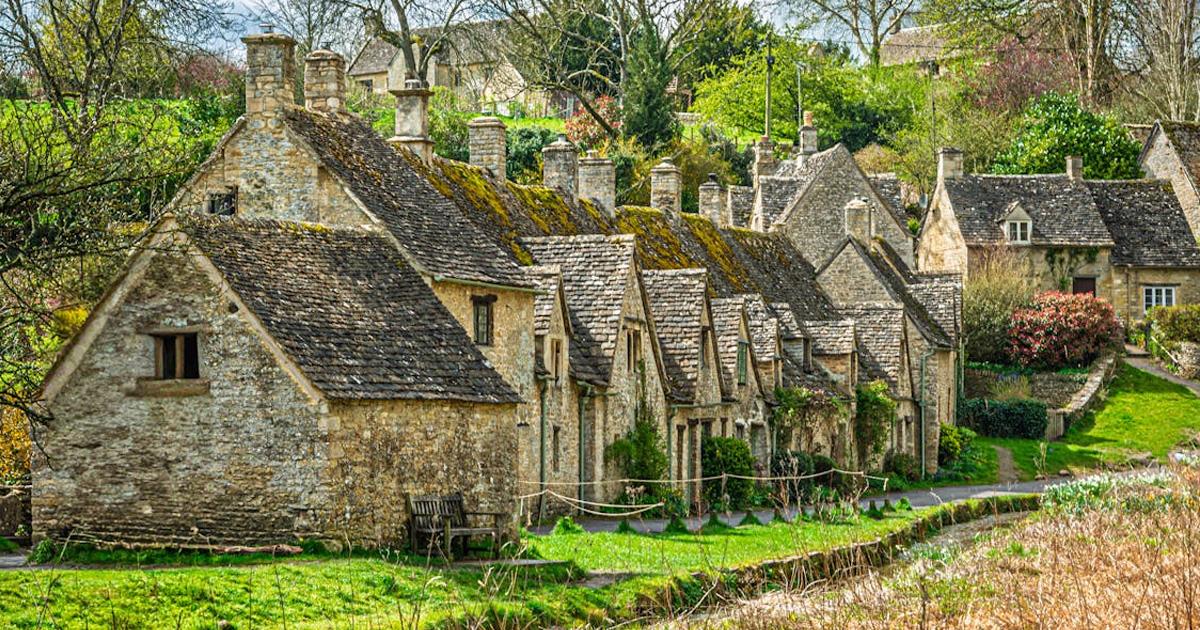
“I am truly alarmed at what goes on in picturesque villages all over the UK,” writes the and author Barbara Crafton. She says, “The real danger is in the Cotswolds. I know this because I watch British murder mysteries as a form of relaxation, and I can tell you that the threat is real.
“Visit a stately home on a beautiful estate and there is sure to be a killing in process, or at least a recent one. Go to a village strawberry festival and someone is sure to end up face down in a tray of scones or drowned in a vat of local ale. And watch yourself if you decide to attend services at the church – you might find a severed head in the baptismal font.
“These things are usually announced by a scream from a woman in a cardigan sweater, although I am at a loss to understand her shock, since such things seem to happen so regularly across the pond. The local constabulary is called in to investigate, and soon they are joined by detective inspectors, some of them from London or other parts of the country, coincidentally in town only for a visit or a brief holiday. They summon their sergeants and the chase is on. It is quite likely that another murder or even a few more will occur during the investigation.
“For heaven’s sake, people, don’t go to these places! No matter how lovely they are, no matter how sweet the little shops on the high street seem, the tea rooms, the pubs. What more proof do you need? It’s a wonder anybody survives.
“I am not the only person who loves British murder mysteries. I often wonder why we love them? Why do the Brits keep turning them out?
Crafton says, “I think I know. They are little sermons on the banality of evil. Hannah Arendt coined the famous term. She wrote on Adolf Eichmann, having covered his trial for The New Yorker in 1961, and expanded her research in her 1963 book, Eichmann in Jerusalem. She was fascinated by Eichmann’s very ordinariness – surely someone who could order such monstrous deeds must be an obvious monster? Surely we should be able to tell who the monsters among us are, should we not? But no. These people seem ordinary. People just like us.
“We have always known this. We have always known that it can be hard to tell the sheep from the goats. We have always known that ordinary people could be summoned to extraordinary things, and that this can be for good or for terrible ill. I was only following orders, was the Nuremburg defense, and it seemed to those who offered it to mitigate the enormity of their own deeds during the Holocaust.”
Crafton takes this one step further, “And if it can be difficult to tell who the monsters are, might it not be equally hard to discern the saints among us? What about the ones who shoulder burdens they never expected to carry, who surprise even themselves at what they are able to endure in the name of love? You know some of them, I am sure, if you stop and think about it. I don’t know how he does it, you say to yourself. There are more of them than we imagine.”
I love the way Crafton’s writing begins with something light and amusing, and guides us, without our noticing it, to something unexpectedly profound. Andrew is also excellent at this kind of amusing-then-unexpectedly-profound writing, as we often see in the email letters he writes to our on Fridays.
And Crafton’s profound message is true. It is difficult to tell who the monsters are. That is one reason abusers so often get away with doing horrible things for so long: we have a hard time thinking that someone we’ve always liked could do such a thing, so we don’t believe the person who’s been the victim of it. And she is also right that it’s difficult to discern the saints among us. We are used to thinking of them as ordinary people. And they tend not to call much attention to themselves as they shoulder the burdens they never expected to carry, as they endure so much in the name of love, as they step up to do the right thing in the middle of adversity.
On All Saints Day we recognize the famous saints, the ones who get plenty of attention. And I’m glad that on All Saints Day we read this passage from the Gospel of Luke about the saints who are often overlooked. In Jesus’ day, like our own, there was a sense that to be blessed meant that you were prosperous, well-fed, happy, and respected. It’s sometimes called the “Prosperity Gospel.” In today’s gospel Jesus turns that perception upside down. Jesus shocks his listeners by saying the exact opposite of the prosperity gospel: Blessed are you who are poor, blessed are you who are hungry, blessed are you who weep, blessed are you when people hate, exclude, revile, defame you.
We learn several things about Jesus here. In contrast to the idea that money, food, happiness, and respect are signs of God’s favour, the first thing we see is that the people Jesus pays the most attention to--and cares most about--are the poor, the hungry, the weeping, the hated and excluded. And because we are called to follow Jesus, and to imitate Jesus, we too are called to pay the most attention to--and care most about--the poor, the hungry, the weeping, the hated and excluded.
There’s something else here too. When we listen to Jesus’ words, we realize that being blessed is not the same thing as being happy. When we listen to Jesus’ words, we realize that being blessed is not getting from God the things that we all want: money, food, laughter, the good opinions of others. Being blessed has to do with being holy.
As Crafton points out, it is difficult to discern the saints among us. They seem so ordinary. But Jesus sees clearly who they are, because Jesus is looking among the poor, the hungry, the weeping, the excluded. Nobody else notices the poor widow who quietly puts her two pennies into the temple offering, but Jesus sees the saint in her. Nobody else notices the excluded Samaritan who cares for the injured stranger on the side of a desolate road, but Jesus sees the saint in him.
We remember from last week’s gospel that the Pharisee who thought of himself as righteous, and prayed, “I thank you, God, that I am not like other people, thieves, rogues, adulterers, or like this tax collector” was not who Jesus saw as holy. Jesus tells us it was the tax collector who could not even lift his eyes to heaven, but prayed “Have mercy on me, a sinner” who went to his home justified. Being a saint does not mean we are without sin. Each of us is both saint and sinner. We strive for God’s holiness and we ask for God’s mercy.
All Saints Day is one of the four recommended days for baptisms. The reason for that is that while we remember on All Saints Day the saints who came before us, saintliness did not end with their deaths. Those who take the baptismal vows today vow to live faithful and holy lives. They join the company of saints.
We can see the saintliness in them already. It has been a delight during the Inquirers Class to hear Cale speak with such obvious enthusiasm about how much he loves spending time with the folks who come to the Saturday Soul Suppers and, even when he’s tired, how much he loves serving them. Many of them are among the poor, the hungry, the weeping, the excluded and reviled. Cale sees Christ in them. Cale says that serving them is church for him. He said one reason for calling the suppers “soul suppers” is their effect on his own soul.
Harrison has been asking questions about faith and wants to be baptized. We don’t know yet how the rest of his life will develop, but God is at work in him. He might look like an ordinary kid, but God sees his own unique saintliness taking shape and growing, with the help of his parents, his godparents, our entire as we support him in his life and faith, and especially with God’s help.
Of course, we do not wish suffering or adversity on anyone. Still, we know that suffering and adversity are part of this mortal life on earth. And we know that the vows our baptismal candidates take today, and that all of us reaffirm today, are vows that come with a cost, sometimes a steep cost, and that keeping them faithfully may involve loss, suffering, and adversity. In , we are made one with Christ in his death, as well as in his resurrection. It is valuable to remember that when loss, suffering, or adversity arrive, they do not mean that we are abandoned by God or that we are doing something wrong: they do not mean that we are not blessed. On the contrary: to hold fast to faith and to compassion, even while we endure loss, suffering, and adversity, is to be holy, to be saints, to be blessed.
Those who chase after money, food, laughter, and popularity, and get involved in the banality of evil as they do it, might get those things. But Jesus says woe to them. Jesus says they have received their consolation already. There’s nothing more than that. But Jesus gives us the surprising message of reversals: “blessed are you who are poor, for yours is the kingdom of God. Blessed are you who are hungry now, for you will be filled. Blessed are you who weep now, for you will laugh. Blessed are you when people hate you, and when they exclude you, revile you, and defame you on account of the Son of Man. Rejoice in that day and leap for joy, for surely your reward is great in heaven; for that is what their ancestors did to the prophets.” Jesus promises us great rewards when this earthly life is over and we are with all the saints who came before us rejoicing together in heaven. And because Jesus has already taken on flesh and blood and come to participate in this earthly life of ours, with all its suffering, because Jesus has already suffered and died, and by his resurrection overcome suffering and death, the kingdom of heaven has already broken through to earth. Even on earth, we get to participate in God’s holiness. Even on earth we get to participate in the life of Christ. Even on earth the Holy Spirit is at work in each of us.
Because Jesus took on ordinary flesh and blood, Jesus offers us the opportunity to be part of a blessedness that is extraordinary. God turns our ordinary neighbours into blessed saints. God turns our baptismal candidates into blessed saints. God turns us into blessed saints. Thanks be to God.