
Sermon
Proper 27, Year C
Sunday, October 5, 2025
Lucia Lloyd
Share This Sermon
Scripture Reading
Select the Bible reference below to read the passage without leaving the sermon.
Today’s gospel passage is an example of paradox, in which two seemingly opposite things are both true. There are plenty of places in the scriptures in which Jesus talks about rewards and treasures in heaven. Two of those places are in passages in Luke’s gospel that come right before today’s passage. We read them the previous two Sundays. One was the parable of the dishonest steward, in which Jesus says, in effect, the scammers and con artists are shrewd enough to do stuff for selfish purposes, I wish you children of light were that shrewd in giving away my property for generous purposes. If you’re not faithful with money, who will entrust to you the true riches? Use your money to make friends with the poor, so that you’ll be welcomed into the eternal homes. You can’t be a slave of God and a slave of wealth at the same time.
The other is the parable of the rich man and Lazarus, in which the rich man who does not give generously to relieve the hunger of Lazarus while he is alive, ends up in torment and regret after he dies, while Lazarus is carried away be the angels to the bosom of Abraham.
Both of these parables are about the importance of what we do with money. Both of them have to do with how we steward the resources that ultimately belong to God during these earthly lifespans in which those resources pass through our hands. Both of them speak in terms of heavenly treasure and heavenly rewards. So this sense of heavenly treasure and heavenly rewards is one aspect of our relationship with God.
Still, if that’s the only way we relate to God, we’re going to be missing some other essential aspects of the relationship. It can lead to just focusing on getting that reward. It can lead to the attitude of, “Yes, I will care about someone other than myself, as long as I get something out of it.” And we can see that that attitude isn’t truly caring about someone else.
Or “Yes, I will do something unselfish, as long as there’s something in it for me.” And we can see that that attitude isn’t truly unselfish.
It can also lead to the attitude that if we do a good deed or a generous deed, God owes us a reward. And that completely misses the fact God isn’t in debt to us. Everything we have and everything we are already belongs to God. Doing something good isn’t a favour to God that God needs to pay us back for. Doing good is what we’re supposed to be doing all the time.
Here’s the message of today’s parable. Doing the right thing just so you can get a reward out of it is not the goal here. The message of today’s parable is you do the right thing simply because it’s the right thing to do. You do good like it’s your job. Because, as a servant of Christ, it is your job.
The Greek word “doulos” sometimes means servant, sometimes means slave, and sometimes means both. It’s the word used in today’s passage, and translated “slave”. It’s also the word used for Christ in Philippians 2:6-7, which says, “Let the same mind be in you that was in Christ Jesus, who, though he was in the form of God, did not regard equality with God as something to be exploited, but emptied himself, taking the form of a slave (doulos) being born in human likeness, and being found in human form, he humbled himself and became obedient to the point of death, even death on a cross.”
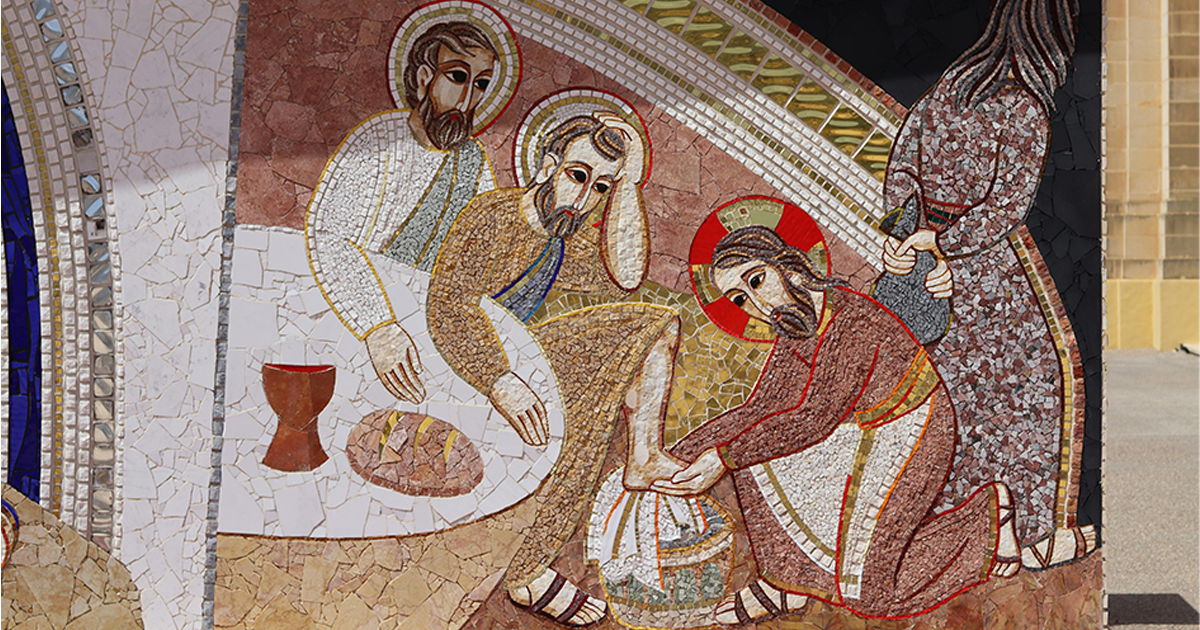
We remember also when the disciples at the Last Supper start arguing over who’s the greatest, Jesus tells them that he is among them as one who serves. To show them even more clearly, he kneels down and starts washing their grimy feet. He tells them to do this too: to care for others as caring for others, not as a way to enrich yourself or increase your status. Jesus cares especially for those without money or status, and he tells us to do that too. Jesus calls us to a life of downward mobility.
The disciples and apostles, including the Apostle Paul, frequently say they are a doulos, a servant or slave, of Christ. It is the exact opposite of jockeying for position, it is the exact opposite of one-upsmanship, it is the exact opposite of arrogance or entitlement.
We care for our neighbours not because we’re seeking thank-you’s or rewards, but because it’s the basic job description of a Christian. We fall short of it often. And even when we succeed, it’s not something above and beyond our job, we’ve simply done what we ought to have done.
This passage begins with the apostles saying to the Lord, “Increase our faith!” Jesus replies with the message about the mustard seed. But I expect this parable is also a reply to that request. If you want your faith to increase, use whatever faith you have, however small, and put it to work. Do good. Take care of others, especially the poor. Give generously. Do the right thing. Pray. Show up for worship. And just like you show up for work whether you happen to be in the mood for it or not, put your faith to work whether you happen to be in the mood for it or not. Do good whether you feel like it or not, because it’s good to do good. Give generously because it’s right to give God’s resources. Pray whether your emotions are up or down.
To do something in order to get rewarded for it is just a business transaction. To care for others in order to care for others is where God grows compassion in our hearts.
To do good in order to get a reward from God is just a glorified business transaction. To recognize that everything we have and everything we are is a gift from God is where God grows gratitude in our hearts.
To do the right thing in order to get rewarded is a business transaction. To do the right thing because it is the right thing to do is where God grows righteousness in our hearts.
Whatever faith you have, even if it seems tiny to you, put it to work by loving God and loving your neighbour. By the grace of God, it just might grow.