
Sermon
Lent 3, Year A
Sunday, March 8, 2026
The Rev. Lucia Lloyd
Share This Sermon
Scripture Reading
Select the Bible reference below to read the passage without leaving the sermon.
If there are things you have questions about in the Bible or in Christianity, this sermon is for you. If there are things you don’t understand in the Bible or in Christianity, you have come to the right place for today’s gospel.
I was intrigued by an observation in my reading on last Sunday’s gospel, that in John’s gospel there is a frequent pattern: The enquirer says something. Jesus answers in a saying that is hard to understand. The enquirer misunderstands that saying. Jesus answers with a saying that is even more difficult to understand. And then Jesus gives a discourse and explanation. This pattern happens in today’s gospel not once, but twice. The first time it’s in Jesus’ conversation with the Samaritan women, and the second time it’s in Jesus’ conversation with his disciples once they come back with the food. So today’s sermon is going to explore themes of questions, understandings and misunderstandings, what’s known and unknown.
Before we get to that, the context. As today’s gospel tells us, Jews do not share things in common with Samaritans. The Jews and the Samaritans have been at odds for centuries over differences on a variety of issues, and the resentments add up as each side has grievances about the past behaviour of the other. This has become so much of an issue that Jews who are going from Judea to Galilee often go all the way around Samaria which takes twice as long, rather than take the short way through Samaria, where they risk being harassed or attacked by Samaritans. However, Jesus decides to take the direct route through Samaria. So Jesus is already showing a rare willingness to go outside the comfort zone of his own group. Not only that, he even talks to a Samaritan and asks a Samaritan to do him a favour.
This is even more unusual because he’s also talking to a woman. Men did not normally talk to women in public. One reason for that was that men who felt lust or temptation did not really want to deal with the fact that the lust and temptation were coming from themselves, so they projected their own inclinations on to women, blamed women for being temptations, and avoided interacting with them, or even in some cases looking at them. The other reason was that men often thought of women as inferior, and they did not want to interact with anyone they thought of as inferior. The idea of a man talking to a woman is so beyond the pale that when the disciples come back, John tells us, “They were astonished that he was speaking with a woman.”
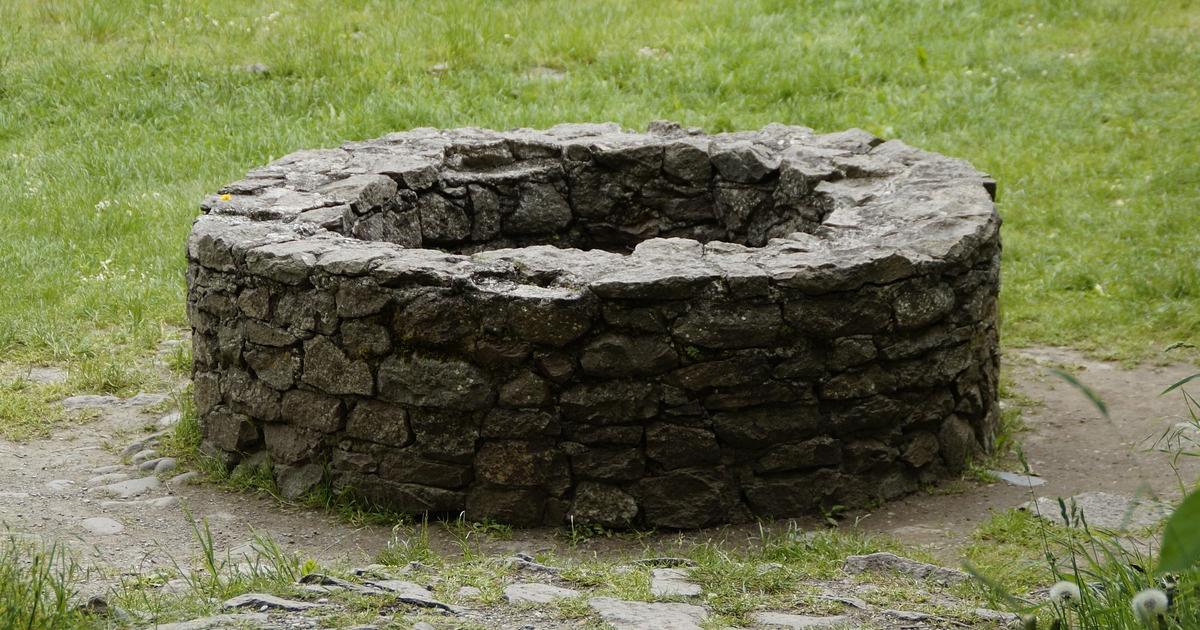
Jesus is very different from other men. He speaks directly to a Samaritan and a woman, despite their differences, which we admire. And I want to point out something else that discussions of this passage often miss. With all the reasons for them not to talk to each other, the Samaritan woman could just walk away from this man, this foreigner. But she doesn’t. The Samaritan women also has the courage to interact with this man, this foreigner, which we can also admire. And in addition to her courage, she also shows curiosity. Her first words are a question, “How is it that you, a Jew, ask a drink of me, a woman of Samaria?” So next we get to step 2 in the pattern: Jesus says something difficult to understand: “If you knew the gift of God, and who it is who is saying to you, ‘Give me a drink, you would have asked him, and he would have given you living water.” The term “living water” can mean flowing water, such as water in a stream or a river, as opposed to still water, such as in a pond or a well, like the one that’s in front of them. So the woman interprets “living water” to refer to literal water, and it’s not surprising that she would. I found it interesting that every time this pattern shows up in the Gospel of John, each of the people misunderstand Jesus because they take his words literally. And every time, Jesus is using the words metaphorically or symbolically to express a spiritual truth.
The two of them in this conversation are talking about a variety of different topics, but here’s the important thing: all the different things they say are asking two deeper questions: Who are you? Who am I?
“How is it that you, a Jew, ask a drink of me, a woman of Samaria?” Is a way of asking, “Who are you? Why are you not acting like other Jewish men?” And in his reply, Jesus says, “If you knew the gift of God, and who it is that is saying to you, ‘Give me a drink’…” He points out that she doesn’t know who he is yet. But she doesn’t run away in fear, and she doesn’t give up in frustration. What I love about her is that even when she doesn’t understand, she stays engaged, she wants to know more, and she keeps asking questions.
We can see why this situation would look strange to her. He’s just asked her for water, and now he’s saying that she could have asked him for water. But, as she accurately points out, he doesn’t even have a bucket, which is why he couldn’t get his own water from the well. Where’s he going to get living water from? And is he slighting the still water in this well, which is a gift from her ancestor Jacob, by implying it’s inferior to his flowing water? So she articulates her question, “Are you greater than our ancestor Jacob, who gave us the well?” She might have a kind of incredulous “Who do you think you are?” tone here. But I expect it’s more than that. I expect that her questions are more than idle curiosity. I expect that her desire to know more comes out of a place deep within her that knows this is no ordinary man. I expect there is something deep in her intuition, deep in her spirit, that she can’t explain even to herself, that knows that this man is greater even than Jacob, and that’s why the question pops out of her mouth.
Maybe you can relate to that. There’s a lot we don’t understand, a lot of questions we have. And at the same time, in the depths of our spirits there’s a knowing, a recognition, that this Jesus is something special, something greater, something holy, something divine, something we want.
Jesus responds to her question with a saying that is even more difficult to understand. It’s not just literal flowing water he’s talking about; he’s offering water that causes you never to be thirsty, it will become in you a spring of water gushing up to eternal life. The Samaritan woman does not understand exactly how that works, but she knows she wants it. And she has the courage to ask for it. She says that she wants it so she never has to be thirsty, and then she adds something else: that she wants it so that she will not have to keep coming here to draw water.
Trudging through the desert to get to a well, and then trudging home carrying your water is not a pleasant task. Most women would go to the well in the evening to get a break from the heat, but John tells us this woman is there at noon. Why? It may be that she is treated so horribly by the other women that she would rather go to the well when the desert sun is most ferocious in order to avoid them. It may be that she really does not want to be known. But then Jesus says, “Go, call your husband, and come back.” And her heart sinks.
Still, she continues the conversation, and she continues it truthfully. She tells him honestly who she is, “I have no husband.” And he tells her that he knows her. “You are right in saying, ‘I have no husband’; for you have had five husbands, and the one you have now is not your husband. What you have said is true.” We do not know the details of what happened to her. Have her husbands died? Life was short and dangerous at the time, so that’s quite possible. And to be widowed means to be poor because there was no way for a woman to support herself or protect herself without a husband. Did she agree to marry another man, even if she didn’t really want to, because she had no other options? And at some point did a husband keep her around for awhile and then abandon her? Then she would have a bad reputation as well as poverty. As she got more desperate, did she have to attach herself to men who treated her worse until she got to the sixth man who wouldn’t even grant her the dignity of being called his wife? And did the rest of her society, instead of questioning the patriarchal systems that pushed a woman to desperation, simply blame her and think of her as not much better than a prostitute? Had she even started to think of herself that way? It would not be surprising that being known by other people is what she was trying very hard to avoid.
Still, this foreigner is not like anybody she’s ever met. He knows her secrets and he doesn’t judge or condemn her. He even points out her honesty. She is amazed that he somehow knows her past, he knows all about who she is. And I think there’s something deeper than that. I think she feels his unconditional love for her. And in a beautiful twist, when she becomes aware that he knows who she is, she then becomes aware that she knows who he is. She says, “Sir, I see that you are a prophet.” She goes on to talk about how Samaritans worship on this mountain (Mount Gerazim) and how Jews say people must worship in Jerusalem. She may simply be trying to change the subject away from her marital status. On the other hand, worship at the Temple in Jerusalem is a really big deal for the Jews. But not for Jesus. Jesus isn’t interested in where people worship. He says “Woman, believe me, the hour is coming when you will worship the Father neither on this mountain nor in Jerusalem…the hour is coming and is now here when the true worshippers will worship the Father in spirit and truth, for the Father seeks such as these to worship him.” I love that part, that not only are we seeking God, God is seeking us. Jesus brushes aside all the differences between Jews and Samaritans. How would this Samaritan woman feel, hearing this amazing prophet tell her, a Samaritan and a woman, who was treated like an outcast even in her own society, that she is not only known, but sought by God?
She blurts out, “I know that Messiah is coming.” Why would she say that? Again, I think there is something deep within her that knows that Jesus is more than a prophet, that he’s the Messiah. And Jesus responds to her knowing by making himself known. “I am he, the one who is speaking to you.” Just then the disciples come back with the groceries, and are astonished that their rabbi was speaking with a woman. Seeing that the disciples are clearly not about to talk to a woman themselves, the Samaritan woman leaves her water jar behind and goes back to the city.
The disciples urge Jesus to eat, and he says “I have food to eat that you do not know about.” The disciples misunderstand because they think he’s talking about literal food. He says, “My food is to do the will of him who sent me and to complete his work.” He tells them he’s sent them to reap that for which you did not labour.
While the disciples are having lunch, it turns out that the Samaritan woman is the one labouring in the spiritual harvest. She has become the first evangelist in the Gospel of John, and a successful one at that. As John tells us, “Many Samaritans from that city believed in Jesus because of the woman’s testimony, ‘He told me everything I have ever done.’ Before she met Jesus she was trying to avoid all contact with people. Now, she’s going to crowds to share her testimony. Before she met Jesus she hated the thought that people would know the things she’s done; now, she’s talking about the way Jesus knows all about her.
We all have parts of our lives and parts of our thoughts that are embarrassing; we all have our regrets, our failures, our weaknesses, we all have things we feel guilty about or ashamed of, things we want to hide from others, and even want to hide from ourselves. The good news of the gospel is that Jesus knows all of that, and loves each of us unconditionally. Like the Samaritan woman, we can allow ourselves to experience that unconditional love, to allow ourselves to experience being known. And we don’t have to let all that stuff get in the way. When we are fully known and fully loved by God, we can listen to the voice within us that knows God, that knows Jesus. We can have the courage to keep asking questions, to keep interacting, and to keep saying how wonderful it is that God knows everything about us and loves us unconditionally.