
Sermon
Follow Jesus
Sunday, August 30, 2026
The Rev. Carol Langley
Share This Sermon
Scripture Readings
Select any Bible reference below to read the passage without leaving the sermon.
But [Jesus] turned and said to Peter, ‘Get behind me, Satan! You are a stumbling-block to me; for you are setting your mind not on divine things but on human things.’Then Jesus told his disciples, ‘If any want to become my followers, let them deny themselves and take up their cross and follow me. (Matt: 16: 23 – 24)
Whew! “Get behind me, Satan!” What harsh and shocking words to fling at Peter, especially coming from Jesus. We don’t expect it, and we certainly don’t like it. And the words he addresses to those around him, and to us, aren’t particularly welcome either: ‘If any want to become my followers, let them deny themselves and take up their cross and follow me.” And yet placed in context they are words of life.
We have to go back to last week’s Gospel reading to really understand what’s going on. Jesus has gathered his disciples around him and asked them, “What are people saying about who the Son of Man is?” The disciples gave various answers, and then Jesus stopped them and asked, “And how about you? Who do you say I am?” Peter blurts out, “You are the Christ, the Son of the Living God.” Well done, Peter; he’s right! Jesus commends him saying that on his statement of faith, that Jesus is the Christ, he will build his church and to Peter he will bequeath authority to oversee admission to this Church. Through his ministry of teaching and healing, the disciples have come to understand that Jesus is the Messiah, the Christ. Now they have to learn that he is he suffering Christ, and Peter doesn’t like it!
Jesus explains to his disciples that now it’s absolutely necessary for him to go to Jerusalem, submit to an ordeal of suffering at the hands of the religious leaders, be killed, and then on the third day be raised up alive. Strangely, they only hear Jesus speak of suffering and death; they are deaf to the Good News that Jesus’s death isn’t final; that he will be raised on the third day. In the thunder of the unexpected profession of suffering and death, the Good News of new life is silenced. No, they think, the Christ comes to end our suffering; he comes to win, not to lose. They were expecting a conquering Messiah, a warrior king, who would sweep the Romans from Palestine and lead Israel to power. They knew their Scriptures but, like us, they preferred to overlook the hard parts such as those from the prophet Isaiah:
But he was wounded for our transgressions, crushed for our iniquities; upon him was the punishment that made us whole, and by his bruises we are healed. (53:5)
No, this isn’t the Messiah Peter was expecting nor one he was eager to accept. And so Peter takes Jesus aside protesting, “God is merciful to you Lord! This will never happen to you.” Perhaps Peter thinks that by assuring Jesus of God’s mercy and, so, of God’s protection, he is doing Jesus a favour. From Peter’s point of view it’s a friendly rebuke, well-meant; much like any friend would give to someone who was being too hard on themselves. But Jesus has been tempted with much the same words before. In the wilderness, just as Jesus was about to begin his mission, Satan hissed, “Since you are God’s Son, jump…He has placed you in the care of angels. They will catch you so that you won’t so much as stub your toe on a stone.” (Matt.4:5-6) Horror-stricken and filled with grief that he’s been so misunderstood, Jesus wheels around and says, “Get back behind me, Satan!” “The sharpness and the poignancy of Jesus’ answer are due to the fact that Peter is urging upon him the very things which the tempter was always whispering to him, the very things against which he must steel himself. Peter is confronting Jesus with that way of escape from the Cross which to the end beckoned to him.” (Barclay, pg.148/149)
As Bruner says in his commentary, “Care of Jesus is divine; control is devilish!” (pg142) And, oh how we want to control God! Do it my way, Lord. Don’t let me fail; don’t let me suffer; don’t leave me wondering, answer me! “Wait!” I don’t want to wait! When God doesn’t act the way we want or expect, we wobble. But we forget that the first words spoken by Jesus to Peter in the Gospel were, “Come and follow me.” Now Peter hears, “Get back behind me.” “Peter your place is behind me, not in front of me. It is your place to follow me in the way I choose, not to try to lead me in the way you would like me to go.” If we would be disciples of Jesus, we are invited to follow him; not get ahead of him, not control him, but to obey him.
In Jesus’ day discipleship wasn’t confined to being a follower of Jesus. There were many rabbis who had disciples. A young man would complete what education was available to him and then, if he were so inclined, he would seek out a rabbi that he respected and wanted to emulate and ask to become his disciple. He was expected to learn to do what the rabbi did and eventually to be who the rabbi was. That is what Jesus’ disciples would have expected: to do what Jesus did, and to be whom Jesus was. Not such a surprise then that when Peter saw Jesus walking on water and thinks to himself: if Jesus is doing it then I too can do it. The only problem was that he took his eyes off Jesus and saw the storm all around him. Fear overcame faith and he sank. Like us, sometimes Peter gets it right and sometimes he doesn’t! Barclay points out that Jesus’ command to Satan is simply, “Be gone!” while his command to Peter is, “Be gone behind me!” that is to say, “Become my follower again.” Satan is banished from the presence of Christ: Peter is recalled to be Christ’s follower. (p150) For those who would follow Jesus, failure is never final. Even after we’ve fallen, Jesus will never let us go. Here Peter teaches us that it isn’t enough to point to Jesus; we must follow him.
Jesus continues saying to Peter, “Your mind isn’t on divine things, it’s on human things.” Peter, “You aren’t gripped by the things that concern God.” Peter thinks he is. He wants Jesus to win not lose. He’s been looking forward to sharing Jesus’ glory not his pain. He is still deaf, as many of us, are to the promise of new life: ‘on the third day I will be raised to new life.’ Peter wants Jesus’ victory, and his own, now. However, Jesus has made his decision to go to the Cross; now he challenges Peter and the other disciples to make the same decision for themselves.
Jesus says to them*, “If any wish to come after me, let them deny themselves and take up their cross and follow me.”* The Message puts it this way, “Then Jesus went to work on his disciples. “Anyone who intends to come with me has to let me lead. You’re not in the driver’s seat; I am. Don’t run from suffering; embrace it.” Tough words! We like to be in the driver’s seat because it means we’re in control. Life feels safer that way, but in the end that road leads nowhere. “Let me lead,” says Jesus. “You follow!”
What is Jesus saying when he says, “…let them deny themselves and take up their cross”? Well, I think it means different things to different people as well as being understood in a different way at different times in our lives. Early on in my Christian journey, denying myself meant giving up dessert during Lent and now, in my old age, it means trying to think more about what someone else needs than what I want. Nevertheless, I don’t think we are called to deny our needs; indeed, we are called to look after ourselves. Jesus was always aware of his need for solitary time and prayer to replenish himself.
I think it’s important to note that Jesus says “take up your cross”. “Take” is an active verb which indicates that taking up our cross is a choice we make. We take it up; God doesn’t plonk the cross upon us. It seems doubtful, then, that our cross is some personal and painful trial. Who would knowingly choose to take up any kind of suffering? John Stott says in his commentary “We are always in danger of trivializing Christian discipleship, as if it were no more than adding a thin veneer of piety to an otherwise secular life.” Following Jesus means so much more.
Jesus says, “…let them deny themselves…” Denying oneself doesn’t mean giving up luxuries during Lent or attending church regularly. Discipleship is doing what Jesus does and being who Jesus is. There is no passivity and there is no technique in the journey towards holiness. Jesus says, “If any wish to come after me…” Following Jesus is a position and relationship of choice. We choose to follow, because we have said ‘yes’ to the invitation offered in love and acceptance.
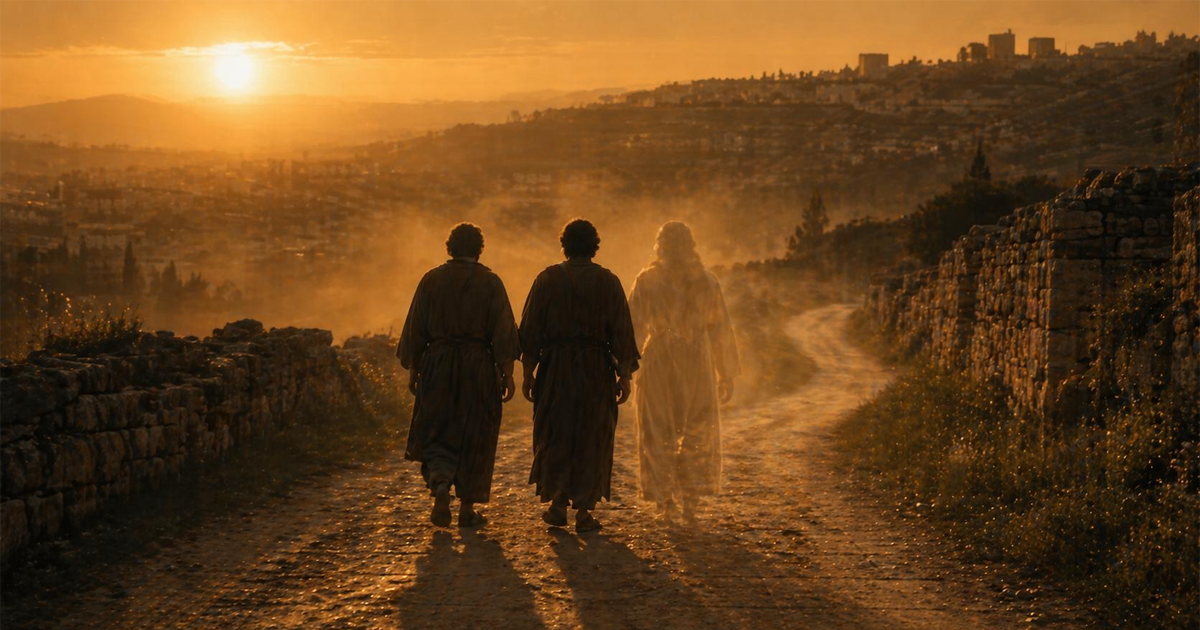
When I was a child, we used to play a game called, “Follow the leader.” Everything the leader did, however difficult or ridiculous, we had to copy. It was a fun especially when I was the leader. I got to make the rules! Now Jesus says, “Come follow me!”