
Spiritual Practices
Why Do the Colours in Our Church Change Throughout the Year?
Discover the meaning behind the changing colours in Anglican worship and how they tell the story of the Christian year, guiding us through seasons of hope, preparation, celebration, and spiritual growth.
July 21, 2026
Jeffrey Martin
Share This Article
If you’ve worshipped with us at St. John’s Church for any length of time, you may have noticed that the colours around the , , , and ’s stoles change throughout the year.
At first glance, they may seem like simple decoration.
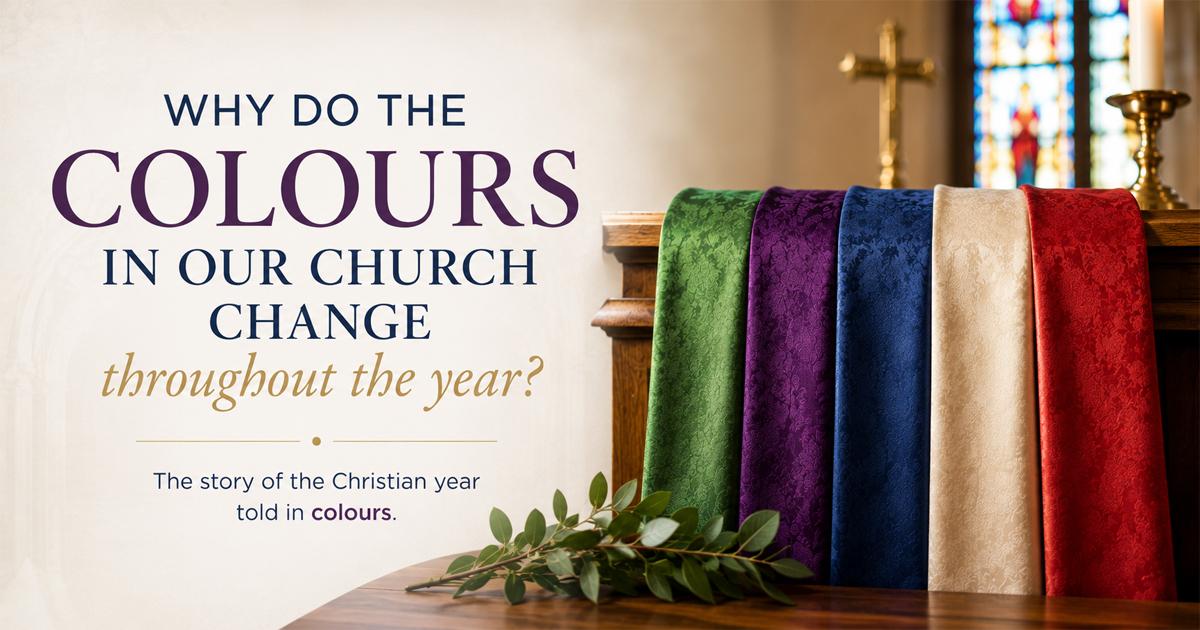
In reality, these colours are part of the Church’s ancient language. Long before many people could read, colours helped tell the story of the Christian year. Today, they continue to remind us where we are in the journey of Christ’s life and the life of the Church.
Rather than changing for the sake of variety, each colour invites us to reflect on a particular aspect of God’s work in the world.
A Brief History
The earliest Christians did not use a formal system of liturgical colours. Over time, however, different regions of the Church began associating certain colours with particular seasons and celebrations.
By the Middle Ages, churches in Western Europe had developed more consistent customs. Following the English Reformation, many ceremonial practices were simplified, but the use of liturgical colours gradually became more widespread again, particularly through the influence of the nineteenth-century Oxford Movement, which renewed interest in the historic of the Church.
Today, the Anglican Church of Canada follows this long tradition. While some local customs vary slightly from to parish, the colours help Christians mark the changing seasons of the Church Year and focus on the theological themes each season proclaims.
𝙂𝙧𝙚𝙚𝙣 — Growth, Hope, and Daily Discipleship
Green is the colour you will see most often.
It is used during what is often called the Season after Pentecost (sometimes referred to as Ordinary Time). Although “ordinary” may sound unimportant, the word actually comes from the idea of counting the weeks in order.
This season is anything but ordinary.
It is the time when we reflect on what it means to live as disciples of Jesus in our everyday lives. Green reminds us of growth, renewal, and the ongoing work of the Holy Spirit as we mature in faith.
𝙑𝙞𝙤𝙡𝙚𝙩 — Preparation and Reflection
Purple, or violet, is traditionally associated with Advent and Lent.
These are seasons of preparation.
During Advent, we prepare to celebrate Christ’s coming at Christmas while also looking forward to his promised return.
During Lent, we journey with Jesus toward the Cross through prayer, repentance, self-examination, and acts of mercy.
Purple reminds us that preparing our hearts is just as important as preparing our calendars.
𝘽𝙡𝙪𝙚 (Sarum Blue)
Some Anglican churches use Sarum Blue during Advent instead of purple.
This practice reflects the medieval English liturgical tradition known as the Use of Sarum, centred around Salisbury .
While Sarum Blue is not required by the Anglican Church of Canada, some parishes choose to use it because it emphasizes Advent as a season of hopeful expectation rather than primarily one of penitence.
Other Anglican parishes continue to use purple throughout Advent. Both practices are found within the wider Anglican tradition.
𝙒𝙝𝙞𝙩𝙚 𝙖𝙣𝙙 𝙂𝙤𝙡𝙙 — Celebration and Joy
White is the colour of the Church’s great festivals.
It is used during seasons such as Christmas and Easter, and on celebrations that proclaim the glory of Christ.
Gold may sometimes be used in place of white on especially festive occasions.
These colours remind us of resurrection, light, purity, and the victory of Christ over sin and death.
𝙍𝙚𝙙 — The Holy Spirit and Witness
Red appears on Pentecost, when we remember the coming of the Holy Spirit upon the apostles.
It is also commonly used on occasions honouring martyrs, whose faithful witness points us toward Christ even in the face of suffering.
Red reminds us of both the fire of the Holy Spirit and the courage to live out our faith.
More Than Decoration
One of the things I appreciate as someone who is still relatively new to Anglicanism is discovering that almost everything in our worship has meaning.
The colours are not there simply because they look beautiful.
They quietly teach us.
Without saying a word, they remind us whether we are waiting, celebrating, growing, reflecting, or rejoicing.
Over the course of a year, they help tell the story of Jesus; from the hope of Advent, to the joy of Christmas, the journey of Lent, the triumph of Easter, the gift of Pentecost, and the steady growth of discipleship throughout the rest of the year.
An Invitation
The next time you visit St. John’s, take a moment to notice the colour around the altar or the stole worn by the .
Instead of asking, “Why did they choose that colour?”
Perhaps ask a different question:
**𝙒𝙝𝙖𝙩 𝙞𝙨 𝙂𝙤𝙙 𝙞𝙣𝙫𝙞𝙩𝙞𝙣𝙜 𝙪𝙨 𝙩𝙤 𝙧𝙚𝙢𝙚𝙢𝙗𝙚𝙧 𝙙𝙪𝙧𝙞𝙣𝙜 𝙩𝙝𝙞𝙨 𝙨𝙚𝙖𝙨𝙤𝙣?
Every colour points beyond itself—to Christ and to the story of God’s saving work that the Church continues to proclaim throughout the year.
Further Reading
The following official Anglican resources provide additional information about the Church Year and Anglican worship:
- Anglican Church of Canada – : https://www.anglican.ca/resources/bas/
- Anglican Church of Canada – Prayer Books & Worship Resources: https://www.anglican.ca/resources/prayer-books-worship-resources/
- Anglican Church of Canada – The Church Year: https://www.anglican.ca/about/liturgical-calendar/
- The Church of England – The Colours of the Church Year: https://www.churchofengland.org/prayer-and-worship/worship-texts-and-resources/common-worship/churchs-year
These resources explain the seasons of the Christian year and the symbolism of liturgical colours within the Anglican tradition.